
Adaptive apparel · Retail · Care · DevelopmentPartnership enquiries →

PAPAHUNE / DESIGN AROUND THE HUMAN BODY

We do not add fastenings. We design freedom of movement.

Three development directions for adaptive apparel: comfort while seated, access without difficult dressing motions, and construction that helps assisted dressing. Anatomy first. Pattern and material second. Fastenings last.

ŁÓDŹ · DEVELOPMENT → SAMPLE → APPROVAL → PRODUCTION

Illustrative clothing development studio with garment pattern research and dress form

01 / CONSTRUCTION MATTERS

Three solutions. Three different needs.

Rather than a universal garment for everyone, we select construction according to posture and dressing routine.

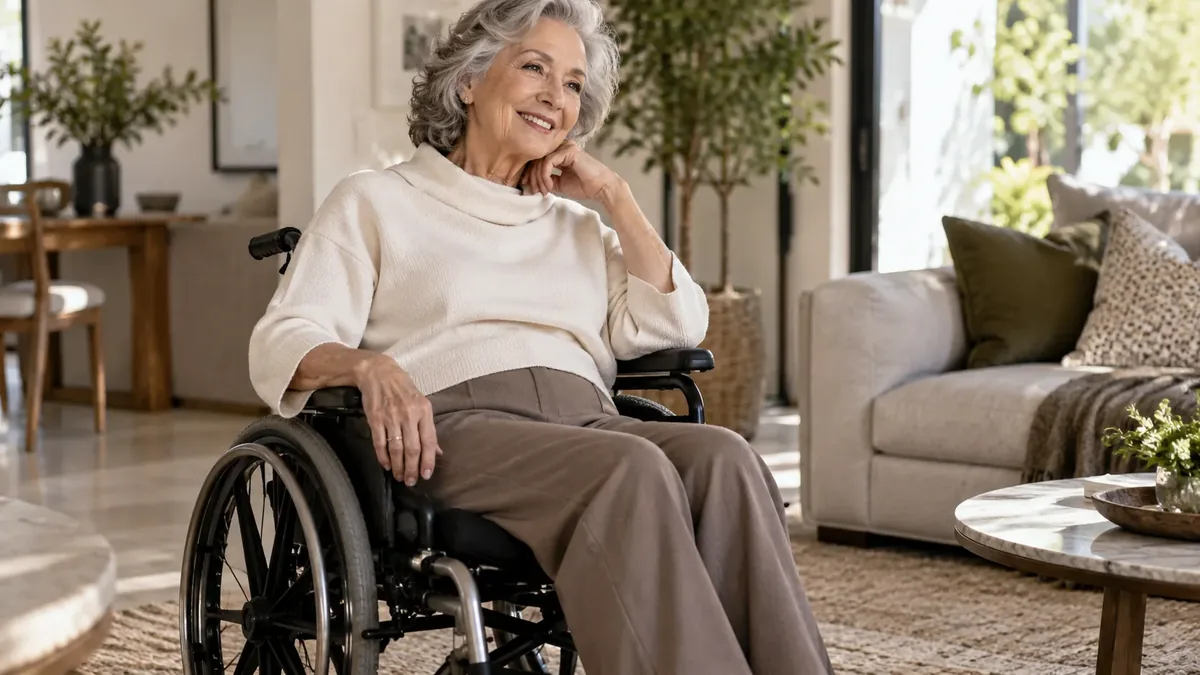
Illustrative photo of an older adult seated in a wheelchair wearing everyday trousers
CONTEXT PHOTOGRAPHY · NOT A PRODUCT PROTOTYPE
01 / PROLONGED SEATED WEAR

Seated Comfort

Trousers shaped for flexed hips and knees.

A raised back rise, less excess fabric at the front, a considered crotch curve and a soft waistband. No bulky seams, pockets or hardware in the rear pressure zone.

Where movement mattersHips · seat · knees

Check seated waistband, pressure, fabric bunching, back coverage and transfers.

Illustrative photo of older adults in a clothing setting; not a PAPAHUNE adaptive prototype
CONTEXT PHOTOGRAPHY · NOT A PRODUCT PROTOTYPE
02 / EASIER GARMENT ACCESS

Easy Access

A truly opening leg — not decorative snaps.

A longer outer-leg opening with a skin-protective guard and an easy-to-grasp pull. Opening length is selected according to movement range, orthotics and dressing technique.

Where access mattersFoot · calf · outer leg

Test dressing sequence, reach, grip strength and closure pressure while seated.

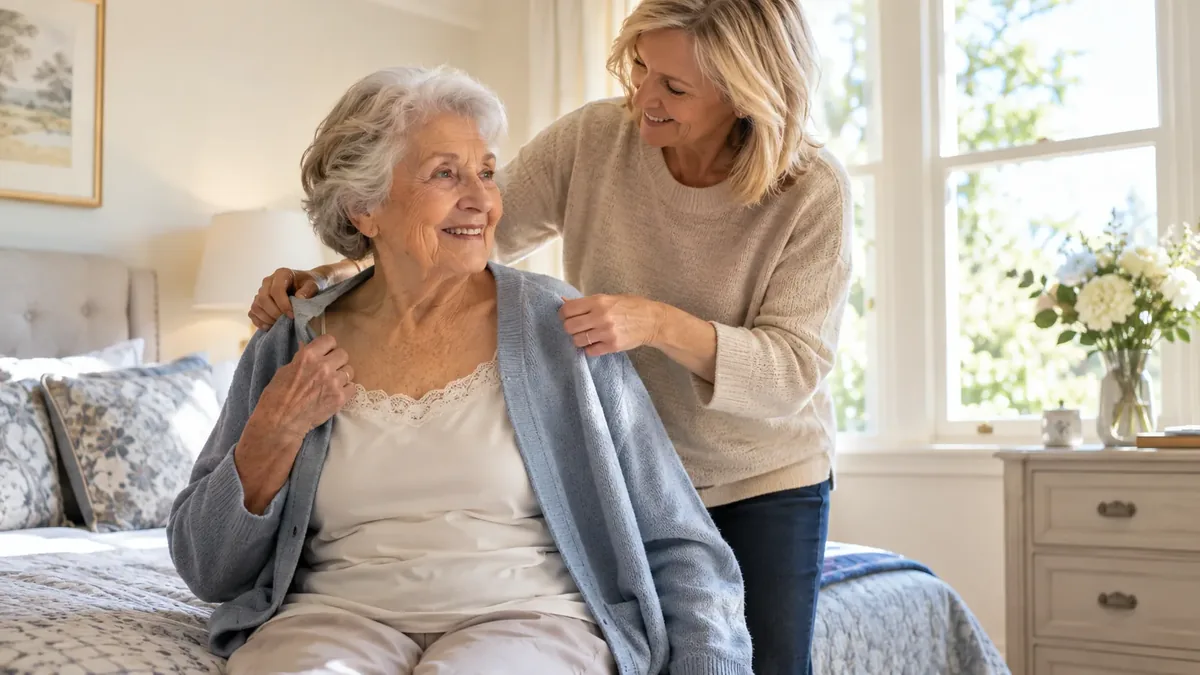
Illustrative photo of an older adult receiving help with outer clothing; not a PAPAHUNE prototype
CONTEXT PHOTOGRAPHY · NOT A PRODUCT PROTOTYPE
03 / ASSISTED DRESSING

Assisted Motion

Tops that reduce overhead arm movement.

A carefully positioned back or shoulder opening instead of a tight neckline, with soft sleeves and sufficient freedom across the shoulder blades. Overlaps protect privacy.

Where openings matterShoulder · underarm · upper back

Test assisted dressing, arm range, skin contact, back coverage and comfort.

02 / MATERIAL ERGONOMICS

Stretch is not needed everywhere.

Three design tools serve different functions. We select them for physical need, not for the marketing word “stretch”.

01 · Pattern geometry

Adjust rise, crotch curve, upper-back width and sleeve arrangement before adding stretch panels.

02 · Controlled recovery

Fabric should give in the direction of motion, recover after tension and avoid local pressure.

03 · Functional opening

A zip, overlap or snap should remove a difficult movement — not merely look “adaptive”.

03 / CONCEPT TO PROTOTYPE

Test on a human body first. Present the product later.

  1. 01 /

    Posture and movement

    Seated wear, knee flexion, reaching, raising arms and transfers.

  2. 02 /

    Dressing and handling

    One-handed or assisted, at natural pace, using the actual closure.

  3. 03 /

    Skin contact and durability

    Seams, pressure, friction, wash performance and shape recovery.

B2B / PRACTICAL PLANNING

What we can tell you before you enquire

A useful first conversation starts with a transparent framework — not an anonymous “request a quote” button.

01

Production base

Hands-on garment development and cut-and-sew know-how connected to Łódź, Poland. Production route, capacity and product readiness are confirmed per project.

02

Indicative MOQ

For feasibility discussions, plan around 100 units per style and colour as an initial benchmark. It is not a guaranteed minimum; fabric, pattern, grading and construction can change the actual MOQ.

03

Paid sampling

Technical assessment first; then a separately quoted prototype with a defined sample, materials, measurements and review scope. Additional iterations are agreed before work.

04

Timing for planning

Illustrative only: allow roughly 3–6 weeks for an initial prototype and 8–12 weeks for a production run after sample sign-off and material confirmation. Not a reserved slot or binding lead time.

05

Private / white label

Private-label development and unbranded supply can be assessed. Artwork, labels, packaging, pattern ownership and production scope must be described in the written proposal.

06

Sizing and grading

Size ranges are agreed for each style. We can review grading, seated rise, length, reach and access direction; no universal size range or fit claim applies to every construction.

Indicative planning information. Commercial terms confirmed individually in writing.

CUT–AND–SEW / CHECKPOINTS

A real production path has decision gates

  1. 01

    Functional brief

    Describe the user, dressing routine, limitations of movement, preferred closure and care needs. We distinguish independent, assisted and seated use.

  2. 02

    Construction & sample

    Agree target measurements, materials, closure placement and one sample scope. Inspect the prototype in the intended dressing scenario, not only on a hanger.

  3. 03

    Approve before scaling

    Document required changes, grading, quality checkpoints, agreed MOQ and a dated production plan. An unapproved prototype is not a production-ready product.

What counts as evidence of production

We do not use illustrative lifestyle photography as proof of a finished adaptive product. Meaningful proof is a physical sample, construction close-ups, a measurement/specification sheet, agreed quality checkpoints and a written production scope. These can be discussed as part of a concrete development brief.

What we do not promise

No medical assessment, therapeutic effect or universal suitability. No guarantee of ready-to-ship stock, a standard size fit, a fixed delivery date or production of a new fastening before feasibility and sample acceptance. Illustrative MOQ and planning windows above are not a binding offer.

PAPAHUNE / NEXT STEP

A low-risk first step

Send one style concept and its intended wearer, likely first-run quantity, desired size range and target date. We assess feasibility, then issue a defined paid-sample proposal before asking you to commit to production.

Request a scoped sample / production review →