
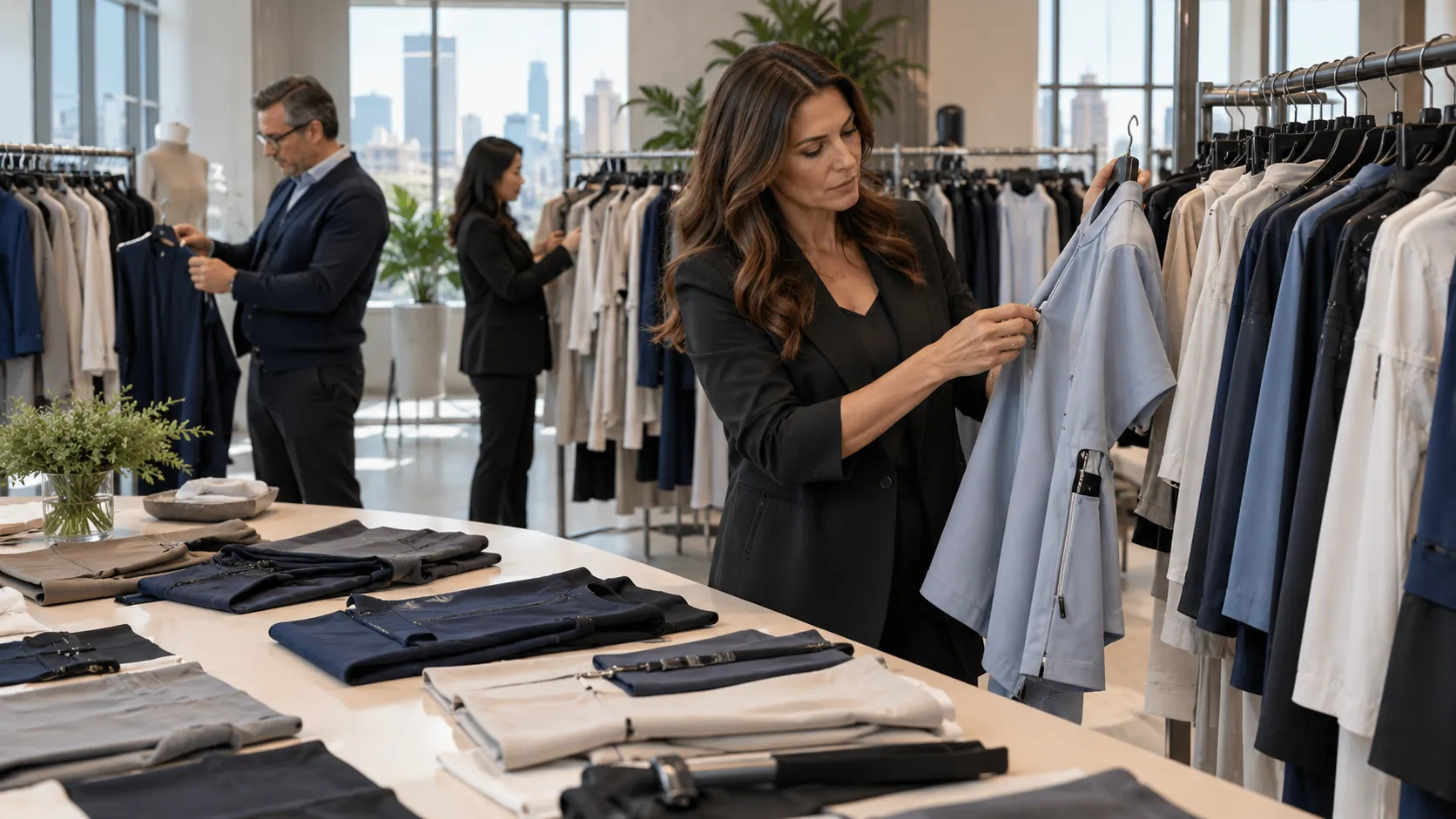
Wholesale clothing that buyers can explain
Buying adaptive clothing is not the same as ordering conventional apparel. Fit and appearance matter, but buyers also need to understand the fastening, opening, dressing sequence, mobility requirements and any limitations that affect suitability.
We present PAPAHUNE product proposals with a precise specification rather than relying on generic descriptions such as “easy to wear”. Trade partners should be able to compare the intended use, construction and care requirements before deciding whether a piece belongs in their range.
Categories to discuss
Adaptive trousers and bottoms. A starting point for buyers looking at elastic waistbands, accessible dressing and comfortable fit while sitting. Different openings and fit requirements require different patterns; no single style should be treated as universal.
Easy-dressing shirts and tops. Everyday-looking pieces with construction that may reduce the need for difficult hand movements or complex fastening, depending on the model.
Comfort-focused homewear. Clothing for everyday use, potentially suited to people who value soft materials, simplified dressing and straightforward care instructions.
PAPAHUNE accepts enquiries and orders for adaptive clothing. Current product availability, exact variants and delivery terms are confirmed in each quotation.
How a wholesale enquiry is evaluated
Start with your company name, country, retail or institutional channel, product categories, estimated opening order and anticipated reorder pattern. If you have technical requirements, include them early: size range, garment-care conditions, labelling, packaging and market-specific standards.
We can then discuss whether the proposal should involve PAPAHUNE-branded products or a separate private-label development brief. Prices, MOQ, availability, samples, payment terms and delivery conditions are determined after reviewing the actual request.
What should a buyer request before ordering?
Ask for a current product sheet, composition and care information, size measurements, closure demonstrations, available variants, lead times, wholesale terms and returns procedure. These are basic decision documents, not extras. The buyer should know what the garment does and what it does not do.